

Understanding Situational Low Mood
Life doesn’t always turn out the way we expected. Relationships end, jobs disappear, plans fall apart and sometimes the future we had imagined for ourselves suddenly looks very different.
When something happens that leaves us disappointed, hurt or unhappy, it’s perfectly natural to feel low. We might lose some of our enthusiasm, find ourselves dwelling on what’s happened or simply struggle to enjoy things in quite the same way.
Usually, given time, we begin to adjust. But sometimes those feelings linger. Weeks or even months later, we can find ourselves returning to the same thoughts, replaying conversations, wondering what we could have done differently or struggling to accept that life has changed.

Feeling unhappy following a difficult experience doesn’t automatically mean you’re experiencing depression. Sadness, disappointment, frustration and grief are all part of being human.
However, the distinction isn’t always clear. Sometimes what begins as an understandable response to a difficult situation can develop into something more persistent, affecting how we think, feel and manage everyday life.
If you’re unsure whether what you’re experiencing is situational low mood or something more significant, you may find it helpful to read my page on hypnotherapy for depression, where I explore depression in more detail and explain how hypnotherapy may help.
At AbsoluteU Clinical Hypnotherapy in Horsham, I work with people who are finding it difficult to move beyond these experiences and begin enjoying life again.
When Life Doesn’t Go to Plan
There are countless situations that can leave us feeling unhappy, and they don’t necessarily have to be particularly dramatic. Perhaps you’ve been made redundant after years of working for the same company. You know you’ll find another job eventually, but that doesn’t stop you feeling rejected or questioning your abilities. Work provided more than an income. It gave your days structure, a sense of purpose and perhaps an important part of your identity.
Or maybe a relationship has ended. Even when you know the relationship wasn’t working, you can still miss the person, the companionship and the future you thought you would share. You might find yourself remembering the happier times and questioning whether things could have been different. Retirement can be another unexpected challenge. After spending years looking forward to having more freedom, some people discover that they miss the routine, social contact and sense of achievement that working provided.
Even positive changes can have an emotional cost. Children leaving home, moving to a new area or starting a different chapter in life can bring feelings of uncertainty alongside the excitement. And sometimes it’s not one significant event. It might be a succession of smaller disappointments, plans that haven’t worked out, friendships that have changed or the uncomfortable realisation that life isn’t quite where you thought it would be by now.
What these experiences have in common is that something important to us has changed, and we’re finding it difficult to adjust. Situational low mood can develop when we struggle to come to terms with those changes, particularly when they affect our confidence, our routines or the way we see ourselves.
Why Do We Sometimes Struggle to Move On?
One of the things I find interesting about human behaviour is how differently people respond to similar circumstances. Two people can experience almost identical setbacks, yet one gradually adjusts while the other continues to struggle. That doesn’t mean one is stronger or more resilient. Our experiences, expectations, beliefs and the personal meaning we attach to events all influence how we respond.
Imagine someone who has been overlooked for a promotion. Initially, they feel disappointed, which is understandable. But as the weeks pass, that disappointment might begin to develop into something more personal. Perhaps they start thinking they’re not valued, that they’ve wasted years with the company or that they’ll never achieve what they wanted. They might begin comparing themselves with colleagues, questioning previous decisions or looking for further evidence that they’re being treated unfairly. Before long, they’re no longer simply responding to the original disappointment. They’re also responding to everything they’ve come to believe it means about themselves and their future.
Our minds are very good at revisiting unfinished business. We go over events, imagine alternative outcomes and try to make sense of things that haven’t worked out as we’d hoped. Sometimes that reflection is useful. It helps us understand what happened and decide what to do next. But when we repeatedly return to questions that have no satisfactory answer, it can become difficult to focus on anything else.
Accepting What Happened Doesn’t Mean Liking It
People sometimes assume that moving forward means they must forgive someone, forget an experience or somehow convince themselves that what happened wasn’t really that bad. I don’t believe that’s necessary. If you’ve been treated unfairly, lost something important or experienced a painful disappointment, you don’t have to pretend it was acceptable. Your feelings may be entirely reasonable given what you’ve been through.
Situational low mood can become particularly difficult when those feelings begin to dominate your life long after the event itself. You may find yourself returning to the same thoughts, wishing things had turned out differently or struggling to imagine a future that doesn’t involve what you’ve lost. You might be waiting for an apology that never comes, hoping someone will change their mind or wishing you could go back and make a different decision. Without realising it, your emotional wellbeing can become dependent on something over which you have very little control.
Acceptance is not the same as approval. It’s recognising the circumstances as they are now, rather than continuing to struggle against what you wish they were. That can take time. And for some people, a little help.
How Hypnotherapy Can Help With Situational Low Mood
When someone comes to see me because they’re feeling unhappy about something that has happened, I’m not interested in telling them they should be thinking positively or encouraging them to put on a brave face. I want to understand what has happened, how they’ve responded to it and, perhaps most importantly, what is making it difficult for them to move forward.
Sometimes we discover that the event has challenged something important about how they see themselves. A relationship breakdown may have affected their confidence or sense of self-worth. Losing a job might have raised questions about their abilities. A major life change may have left them uncertain about who they are or what they want next.
I combine hypnotherapy with techniques drawn from Cognitive Behavioural Therapy (CBT) and Neuro-Linguistic Programming (NLP), working with both conscious thoughts and the subconscious patterns that influence emotional responses. Hypnotherapy provides an opportunity to work in a relaxed, focused state, exploring alternative ways of responding to circumstances that may have become associated with disappointment, regret or unhappiness.
We might work on reducing the emotional intensity attached to a particular experience, challenging unhelpful assumptions, rebuilding confidence or developing a different perspective on what the future might hold.
The approach depends entirely on the person. Someone struggling after redundancy may need something quite different from somebody coming to terms with a relationship ending or a change in family circumstances. And importantly, the aim isn’t to make you happy about something that has genuinely hurt you. It’s to help you reach a point where that experience no longer has quite so much influence over how you feel about yourself and your life.
Rediscovering Your Enthusiasm for Life
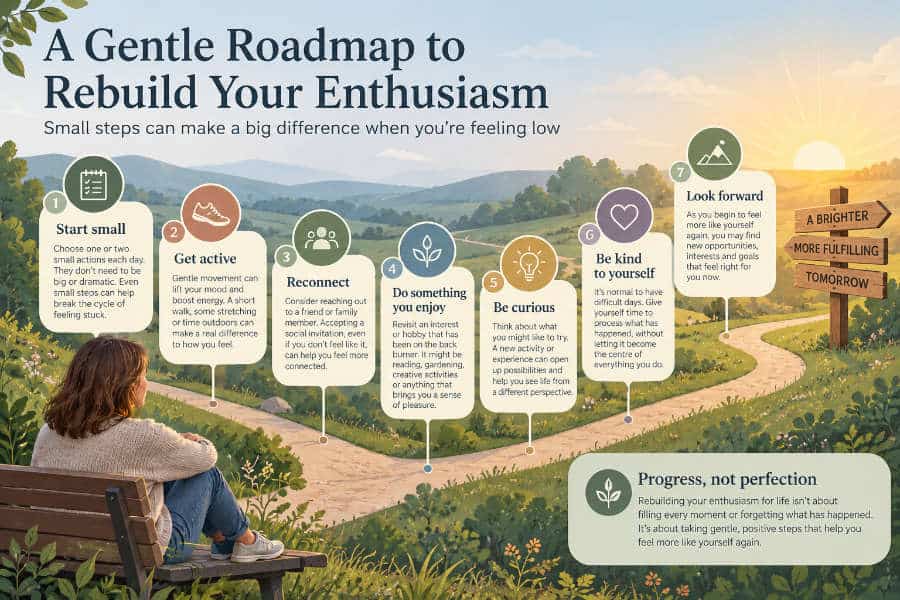
One of the frustrating things about situational low mood is that we often stop doing the very things that might help us feel better. We decline invitations because we don’t feel sociable. We put off making plans because we’re not particularly excited about anything. We tell ourselves we’ll start doing more once we’re feeling happier. But sometimes waiting for our mood to improve before making changes can leave us feeling increasingly stuck.
Part of moving forward can involve gradually reconnecting with activities, relationships and interests that have become less important while we’ve been preoccupied with our difficulties. That doesn’t mean filling every moment with distractions or avoiding uncomfortable feelings. There is a difference between giving yourself time to process an experience and allowing it to become the centre of everything you do.
Perhaps there are things you’ve wanted to try but haven’t quite felt ready for. Maybe there are friendships you’ve neglected, interests you’ve put aside or opportunities you’ve dismissed because they don’t fit the future you originally imagined. Sometimes a difficult experience changes what we want from life. What mattered enormously five years ago might not be quite so important today. Recognising that can open up possibilities we hadn’t previously considered.
Is It Situational Low Mood or Depression?
Depression can also develop following stressful or upsetting events, and persistent situational low mood that begins to affect your ability to function may need further attention.
If you’re concerned about how you’re feeling, particularly if your symptoms are becoming more severe or interfering significantly with everyday life, it’s sensible to speak with your GP. You can also read more about hypnotherapy for depression on my separate treatment page.
Finding Your Own Way Forward
There isn’t a universal timetable for moving beyond situational low mood. A disappointment or major life change that seems relatively unimportant to one person can have a profound effect on another. How long those feelings last, and what helps someone begin moving forward, will depend on their individual circumstances. Nor is there a single way of dealing with these experiences that works for everyone.
In my work, I take time to understand the individual rather than simply concentrating on the circumstances that brought them to therapy. The event itself is only part of the picture. How you’ve interpreted it, what it means to you and what you would like to be different are equally important.
Sometimes the changes people want are quite modest. They’d like to stop thinking about something every morning, feel more comfortable in social situations or get through a day without being reminded of what they’ve lost. Others are ready for a bigger change but feel uncertain about taking the next step. Whatever your circumstances, the aim is to help you find a way of moving forward that feels right for you, rather than trying to return to the person you were before everything happened.
Ready to Feel More Like Yourself Again?
If something has happened in your life that’s left you feeling unhappy, disappointed or unable to move forward, you don’t have to keep struggling with those feelings on your own. I offer confidential hypnotherapy sessions in Horsham, near Crawley, and online. We can explore what’s been happening, how it’s affecting you and whether hypnotherapy might help you approach things differently.
You can’t always change what’s happened in the past, but that doesn’t mean it has to determine how you feel about the future.
If you think that situational low mood is affecting you, you can find out more or book a free initial telephone consultation with me by calling on 07909 992635.