When News and Scrolling Become Too Much
You pick up your phone to check one story and put it down twenty minutes later feeling more unsettled than before. There was another update, then a comment that made the situation sound worse, then a link you felt you ought to read. Nothing in your immediate surroundings has changed, but your attention is still with something frightening that might happen elsewhere, or something you cannot influence. News and social media can leave a long emotional aftertaste.
Media anxiety is a useful description of this experience, rather than a separate diagnosis. It might involve distressing news, repeated checking for developments, comparison with other people or the sense that you must stay available to every update.
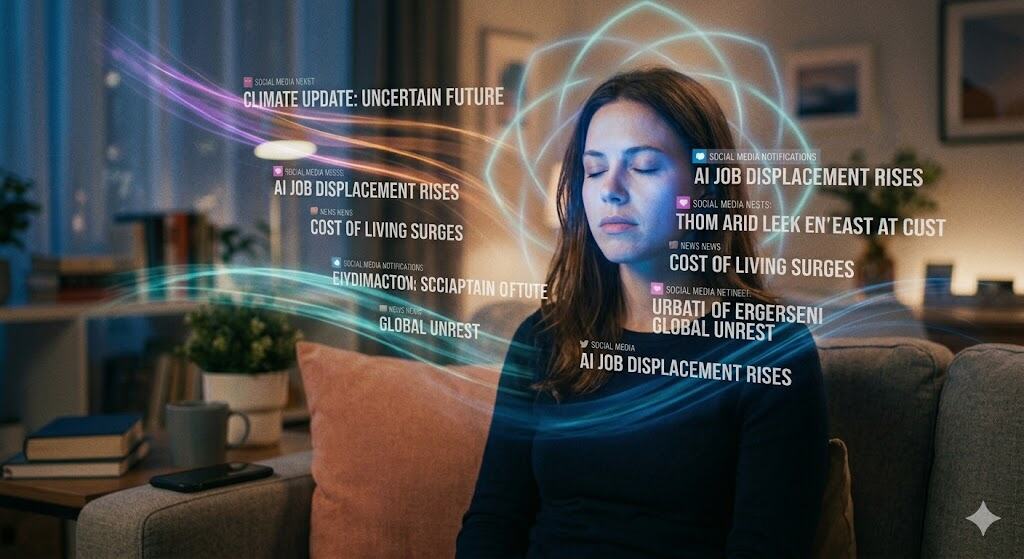
The question is how your use of media is affecting your life: whether it helps you understand something, or repeatedly leaves you tense, distracted and unable to put the subject down. For individual support beyond media habits, see my approach to hypnotherapy for anxiety.
When checking stops giving you what you need
Following the news has a purpose. It can help you make decisions, understand events and feel connected with other people. The difficulty is noticing when the original purpose has been lost. You may already know the important facts, yet feel pulled towards another update in case there is something that will finally make you feel certain or reassured. Often the extra searching produces more possibilities to worry about, rather than an answer you can use.
The habit can be easy to miss because each individual check seems brief. A few minutes before breakfast, another look while waiting for the kettle, a final update before bed. What matters is the cumulative effect and the attention the subject continues to occupy after the screen is off. It may help to notice what you were hoping to find, what you actually found and how you felt afterwards. That gives you something more specific to work with than deciding you simply need more willpower.
Staying informed without staying permanently on call
A useful first experiment is to decide what information you need and when you will look for it. That might mean reading a considered summary at a time you choose, instead of letting every notification decide for you. Keep alerts you genuinely need for work or local safety. Other updates can wait until you have chosen to give them your attention. The aim is a media routine that serves a purpose you recognise.
It can also help to choose a small number of sources you trust and distinguish reporting from commentary. Reading several reactions to the same event does not always add useful information. If an update leaves you unsure, you can note the question and return when there is a substantive answer. You do not have to spend the intervening hours watching the uncertainty unfold in real time.
Notice what you are asking the next scroll to do
Sometimes scrolling is a way of seeking reassurance. Sometimes it fills an uncomfortable pause, delays another task or offers company at the end of a difficult day. The same behaviour can have different purposes, which is why removing an app does not always resolve the urge. If checking is meeting a need for connection or a break, it helps to recognise that need and find another way to respond to it.
You could try a short pause before opening the feed and ask what you want from it. If the answer is a specific fact, look for that fact and decide when you have enough. If the answer is relief from feeling unsettled, consider whether previous checks have actually provided it. A walk, a conversation or returning to something practical may give you a more useful change of focus. You can test what helps without expecting every uncomfortable feeling to disappear immediately.
Make room for the part of life you can act on
Distressing events can deserve concern, and reducing repeated exposure does not require you to become indifferent. It may be more useful to decide whether there is a practical action you want to take. You might support a cause, contact someone affected or make a sensible preparation that is relevant to your circumstances. Once you have chosen the action, notice whether further checking changes anything you can do.
The same applies to comparison on social media. If a feed leaves you repeatedly measuring your own life against someone else’s selected moments, you can change which accounts you follow and when you use them. Your response may tell you something about a genuine wish or disappointment that deserves attention. It does not follow that continuing to look will help you understand it. Mind’s information on mental health online discusses checking, comparison and the ways online life can affect wellbeing.
Protect the transition into rest
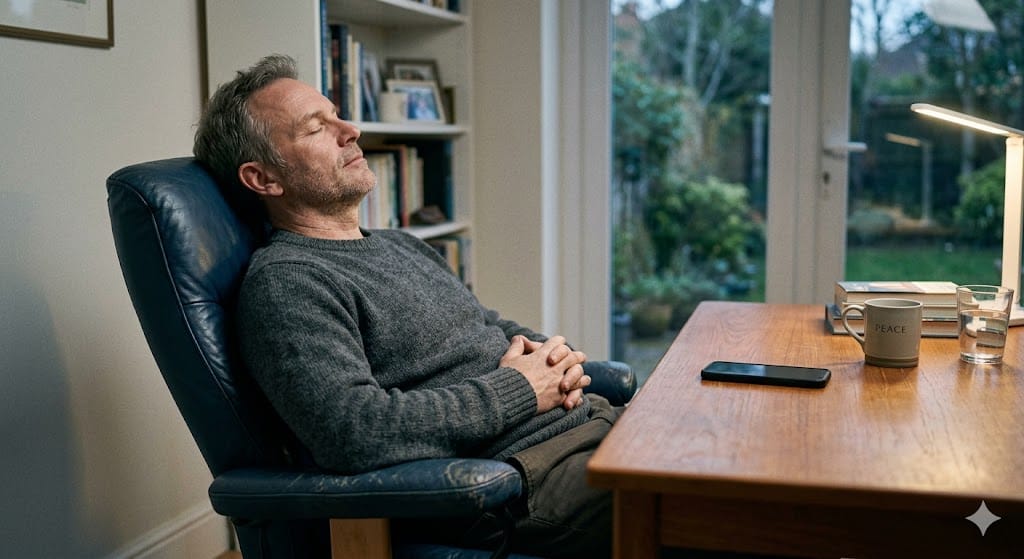
The final check of the evening can easily become the start of another round of reading. If you notice that this leaves you mentally occupied at bedtime, experiment with moving news and social media earlier and giving yourself a different closing routine. Put the phone somewhere that makes the next automatic check less convenient. Choose something realistic enough to repeat, rather than creating a demanding evening programme that becomes another source of frustration.
It may help to tell someone you live with what you are trying, especially if sharing alarming stories has become part of your evening conversation. You can still talk about events that matter, while choosing a time and place that leave room for other subjects. The useful measure is how the change affects your attention, sleep and ability to enjoy the rest of your life, not whether you meet a perfect screen time target.
When a change of routine is not enough
If you understand the habit but still feel unable to step away, it can be useful to look at the anxiety underneath the checking. Perhaps you feel responsible for spotting every danger, find uncertainty hard to tolerate or become caught in health related searches. Those patterns deserve individual attention. You may find the pages on fear of the unknown or health anxiety relevant, depending on what draws you back to the screen.
My anxiety approach combines hypnotherapy with practical techniques to explore these responses. We might work on the expectation behind checking, rehearse a different response to an urge or agree a manageable change to try between appointments. Hypnosis is not a way to make difficult news harmless or switch off reasonable concern. We assess its usefulness by whether you have more choice about your attention and your actions.
Talk to Nicole about anxiety support
If worry and repeated checking are affecting daily life, you can contact me for a free initial telephone consultation. I offer appointments at Roffey Park Institute in Horsham, near Crawley, and online.