
Insomnia and Sleep Problems
How Hypnotherapy For Insomnia Helps With Sleep Problems
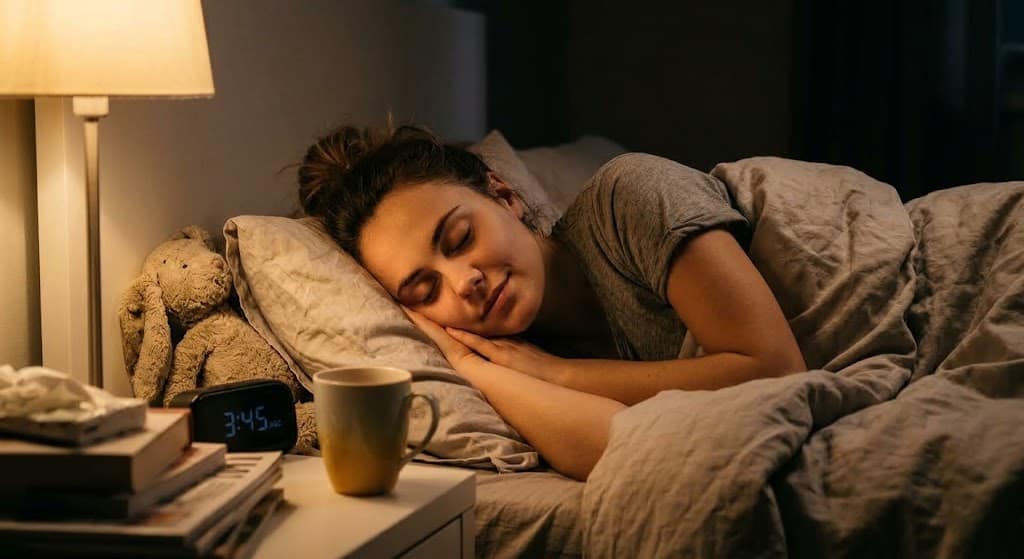
Lying awake at 3am? The pillow is cool, the room is dark, and the house is quiet. And yet the mind won’t switch off. Tomorrow’s to-do list plays on a loop, last week’s awkward conversation replays itself for the tenth time, and the harder you try to fall asleep, the further away it feels. If this sounds familiar, you’re not alone, and it’s far more common than most people realise, but Hypnotherapy for Insomnia can help.
Poor sleep rarely arrives on its own. It usually creeps in alongside stress, anxiety, or a mind that simply hasn’t been given permission to rest. The good news is that sleep isn’t something you have to force. It’s something the subconscious mind can be gently guided back towards.
Hypnotherapy for Insomnia and sleep in Horsham, Crawley and Online

Anyone who has struggled with insomnia will know how unhelpful the advice “just relax” really is. If it were that simple, you’d have done it by now. The trouble is that sleeplessness often becomes its own habit. A few bad nights lead to worrying about not sleeping, which creates the very tension that keeps you awake, and so the cycle continues.
By the time most people reach for help, the bedroom itself has become associated with alertness rather than rest. The subconscious mind has learned, quite unintentionally, that bed is where the racing thoughts happen. Trying to think your way out of this with willpower alone is a bit like trying to fall asleep by staring at the clock, it tends to make things worse, not better.
Working With the Subconscious, Not Against It
This is where hypnotherapy for Insomnia and Sleep Problems is different. Rather than fighting the wakeful mind with logic, we work with the subconscious to change the underlying patterns that are keeping sleep out of reach. Using a blend of hypnotherapy, CBT and NLP, we can help to:
– Quieten the racing, looping thoughts that tend to arrive the moment your head hits the pillow
– Retrain the association between bed and rest, rather than bed and worry
– Release the physical tension that builds up through the day and often peaks at night
– Reduce the anxiety around sleep itself, so the fear of “not sleeping” no longer keeps you awake
– Build a calming wind-down routine, using self-hypnosis, that your mind and body can rely on
The subconscious doesn’t respond well to force, but it responds beautifully to repetition and suggestion. Practising deep relaxation in a session, and then again with your own personal audio at home, teaches the body what calm actually feels like, so it becomes easier to find that state naturally, night after night.
Restless Mind vs. Settled Mind
When sleep problems aren’t addressed, this is often what the evenings look like:
Bedtime thoughts – Racing, looping, hard to switch off
Body – Tense, restless, watching the clock
Self-talk – “I’m never going to get to sleep”
Mornings – Groggy, drained, dreading the next night
When the mind has been supported to settle:
Bedtime thoughts – Quieter, slower, easier to let go of
Body – Relaxed, heavy, ready to rest
Self-talk – “I know how to switch off now”
Mornings – Clearer, steadier, more like yourself again
It Isn’t About “Trying Harder” to Sleep
Trying harder is usually the problem, not the solution. Sleep can’t be forced, only allowed. That’s why hypnotherapy for insomnia isn’t about willpower, it’s about gently reprogramming the automatic responses that have built up around bedtime, so that calm becomes your mind’s natural default rather than something you have to chase every night.
Many of the clients I see in Horsham and Crawley come to me for anxiety or stress, and disturbed sleep is very often part of that picture. As the anxious thoughts settle through our work together, sleep frequently begins to improve alongside it, sometimes without it even being the main focus.
At AbsoluteU Clinical Hypnotherapy in Horsham, Crawley and online, we work with both the conscious and subconscious mind to ease the thoughts and tension that are keeping you awake, and to build genuinely restful sleep, not just a few better nights here and there.
You’ll also have access to personal audios to use at home, so the relaxation created in the room can become part of your evening routine long after the session ends.
Starting Hypnotherapy for Insomnia Sooner Rather Than Later
The longer a pattern of poor sleep continues, the more established it becomes, so there’s real value in addressing it before exhaustion takes hold. If you’ve been lying awake more nights than not, dreading bedtime, or waking up already tired, it’s worth having a conversation sooner rather than later.
Contact now for a FREE initial telephone consultation for sleep problems and insomnia via the link below or call **07909 992635**
For more information on how hypnotherapy can help with anxiety, which so often sits behind disrupted sleep:
Hypnotherapy for Anxiety, panic attacks, social phobias Horsham & Crawley
For more on how stress affects the body and mind:
Hypnotherapy for stress management in Horsham, West Sussex
Further evidence-based research: [Hypnosis and hypnotherapy – Royal College of Psychiatrists]
https://www.rcpsych.ac.uk/mental-health/treatments-and-wellbeing/hypnosis-and-hypnotherapy