

For a long time, hypnotherapy sat on the fringes of healthcare conversations — often misunderstood, sometimes dismissed as stage entertainment rather than a genuine clinical tool. That perception is changing. A growing body of research, alongside recognition from mainstream and integrative medicine settings, is repositioning clinical hypnotherapy as a legitimate and valuable part of modern mental health care.
A recent piece on this shift, [How Clinical Hypnotherapy Is Earning Its Place in Integrative Healthcare – please see link below], explores exactly this trend. The way hypnotherapy is increasingly being welcomed alongside conventional treatments rather than positioned as an alternative to them. It’s a shift I see reflected here in my own practice every week, and one worth unpacking.
From the Fringe to the Mental Health Care Team
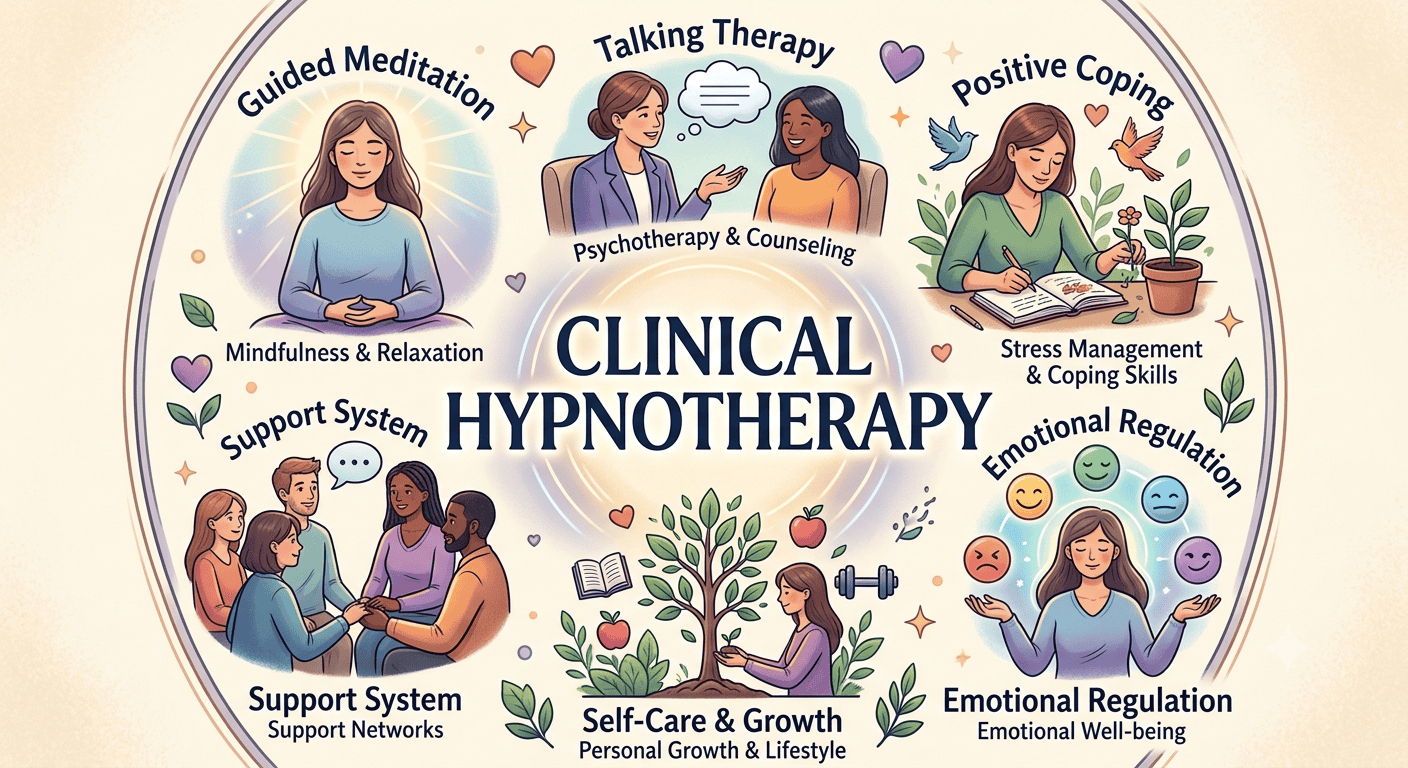
Historically, mental health treatment has followed a fairly narrow pathway — talking therapies, medication, or a combination of the two. What’s changing is the recognition that the mind and body are deeply interconnected, and that approaches which work directly with the subconscious can complement, rather than compete with, established treatments.
This is the essence of integrative healthcare, not replacing what works, but adding tools that reach parts of a person’s experience other approaches can’t always access. Clinical hypnotherapy fits neatly into this model. It’s increasingly used alongside GP care, counselling, and psychological therapies to support people dealing with anxiety, stress, low mood, phobias, insomnia, and the emotional weight of chronic health conditions.
Why Hypnotherapy Has Earned Its Place in Mental Health Care
A few reasons keep coming up as to why hypnotherapy is gaining credibility in clinical and mental health circles:
– It works with the subconscious mind. Much of our anxiety, habitual thinking, and emotional reactivity is driven below the level of conscious awareness. Hypnotherapy creates a state of deeply focused relaxation in which unhelpful patterns — fears, negative self-talk, ingrained stress responses — can be gently identified and reframed.
– It’s evidence-informed, not mystical. Contrary to the popular image shaped by stage hypnosis, clinical hypnotherapy is a structured, collaborative process. The client remains aware and in control throughout; nothing is done to them without consent. This distinction matters enormously for building trust with both clients and referring healthcare professionals.
– It supports the body as well as the mind. Mental health rarely exists in isolation from physical wellbeing. Hypnotherapy’s calming effect on the nervous system can ease physical symptoms of stress and anxiety — tension, poor sleep, digestive upset — which in turn supports better emotional regulation.
– It complements existing treatment, rather than replacing it. This is a key theme in integrative care: hypnotherapy is most effective as part of a wider plan, working alongside a GP, therapist, or other healthcare provider, not instead of them.
What This Means for Mental Health Support Locally
For anyone navigating anxiety, stress, low confidence, sleep difficulties, or the emotional toll of a health condition, this broader recognition of hypnotherapy is genuinely good news. It means:
1. You don’t have to choose between approaches.Hypnotherapy can sit comfortably alongside counselling, CBT, or medical treatment you’re already receiving.
2. The stigma is fading. As more healthcare professionals become familiar with the evidence base, hypnotherapy is increasingly seen as a credible, mainstream option — not a last resort.
3. Sessions are tailored, not scripted. Clinical hypnotherapy isn’t one-size-fits-all. Sessions are built around your specific goals, history, and what you’re hoping to change.
A Considered, Client-Centred Approach
At AbsoluteU Clinical Hypnotherapy in Horsham, Crawley and West Sussex, this integrative philosophy underpins how I work. I see hypnotherapy not as a quick fix, but as one meaningful piece of a person’s broader wellbeing picture — used thoughtfully, ethically, and always with respect for any other care or treatment you’re receiving elsewhere.
If you’re curious about whether hypnotherapy could support your mental health journey, I’d be glad to talk it through with you — no pressure, just an honest conversation about what might help.
*This article draws on themes discussed in [How Clinical Hypnotherapy Is Earning Its Place in Integrative Healthcare](https://www.msn.com/en-gb/health/other/how-clinical-hypnotherapy-is-earning-its-place-in-integrative-healthcare/ar-AA20zPQ9), alongside the practice’s own clinical approach.*